First look
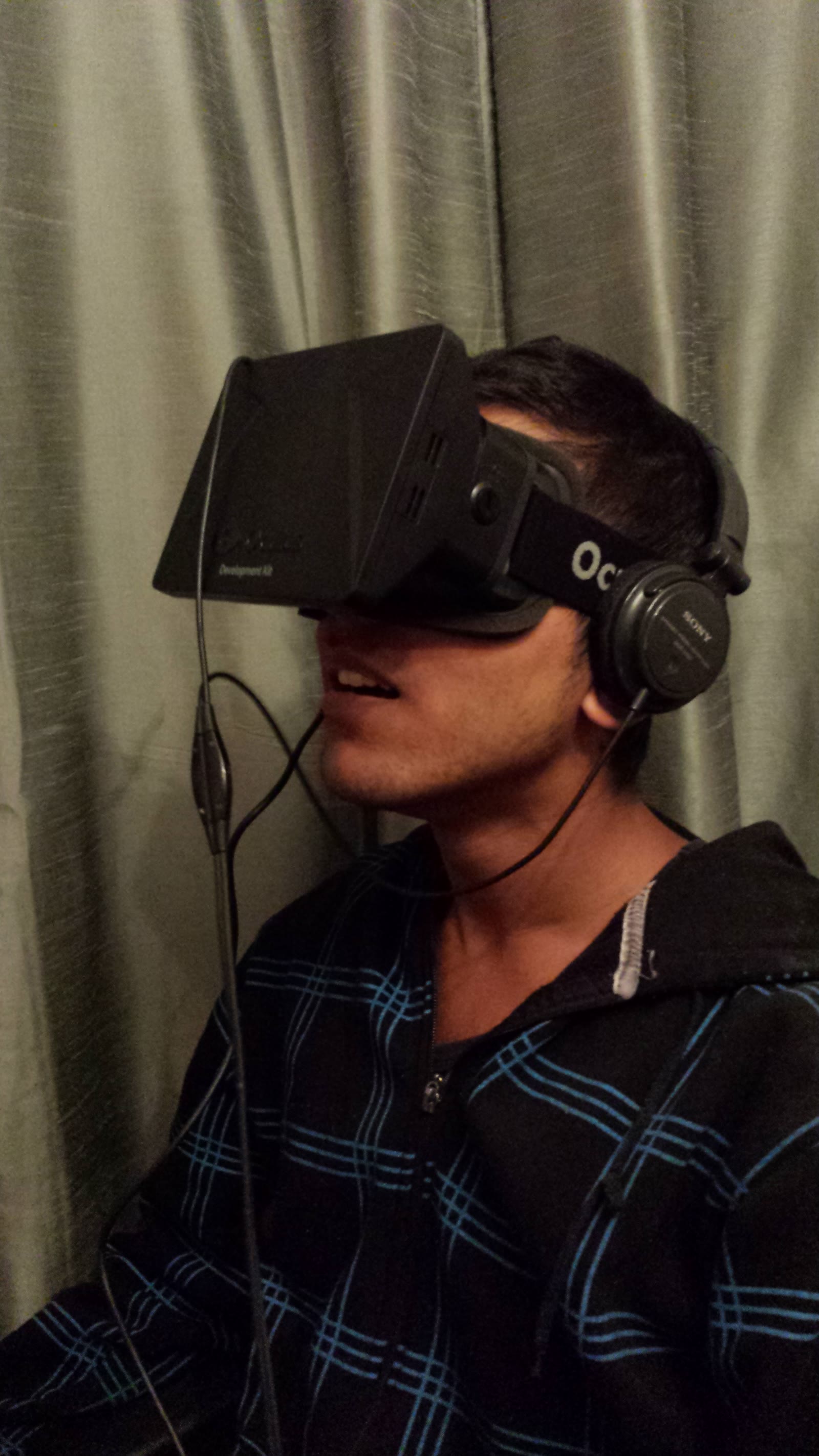
On 4 August 2013 I put on an Oculus Rift DK1 for the first time, and something clicked. Up to that point, photos and videos had always been rectangles. That was simply what they were. We thought of VR as computer-generated worlds, as games, but the moment I had a headset on I saw it could be more than that. A video didn't have to be a flat frame any more. It could hold the real world the way it actually is, and you could stand inside it.
Around then I found Felix & Paul Studios, one of the earliest studios making VR films. Seeing those fixed-perspective VR videos made me want to make my own.
I used to dream about where it could go. Not just standing in a scene, but moving around inside one, what people now call six degrees of freedom. Back in 2013 I thought about that constantly. How cool would it be to capture a whole scene and walk through it later, exactly as it was.
I drifted in and out over the years, a Rift in 2016, then a Quest 2 and a Quest 3, but the idea of building my own camera never really left.
No camera to buy, so I built one
By the end of 2024 I came back to it properly and went looking for a camera. There wasn't one. The Insta360 EVO had come and gone years earlier, and because I'd drifted out of VR I missed it entirely. By the time I went looking they had stopped selling it. I searched everywhere, and nothing on the market did what I wanted, so I was going to have to build it myself.
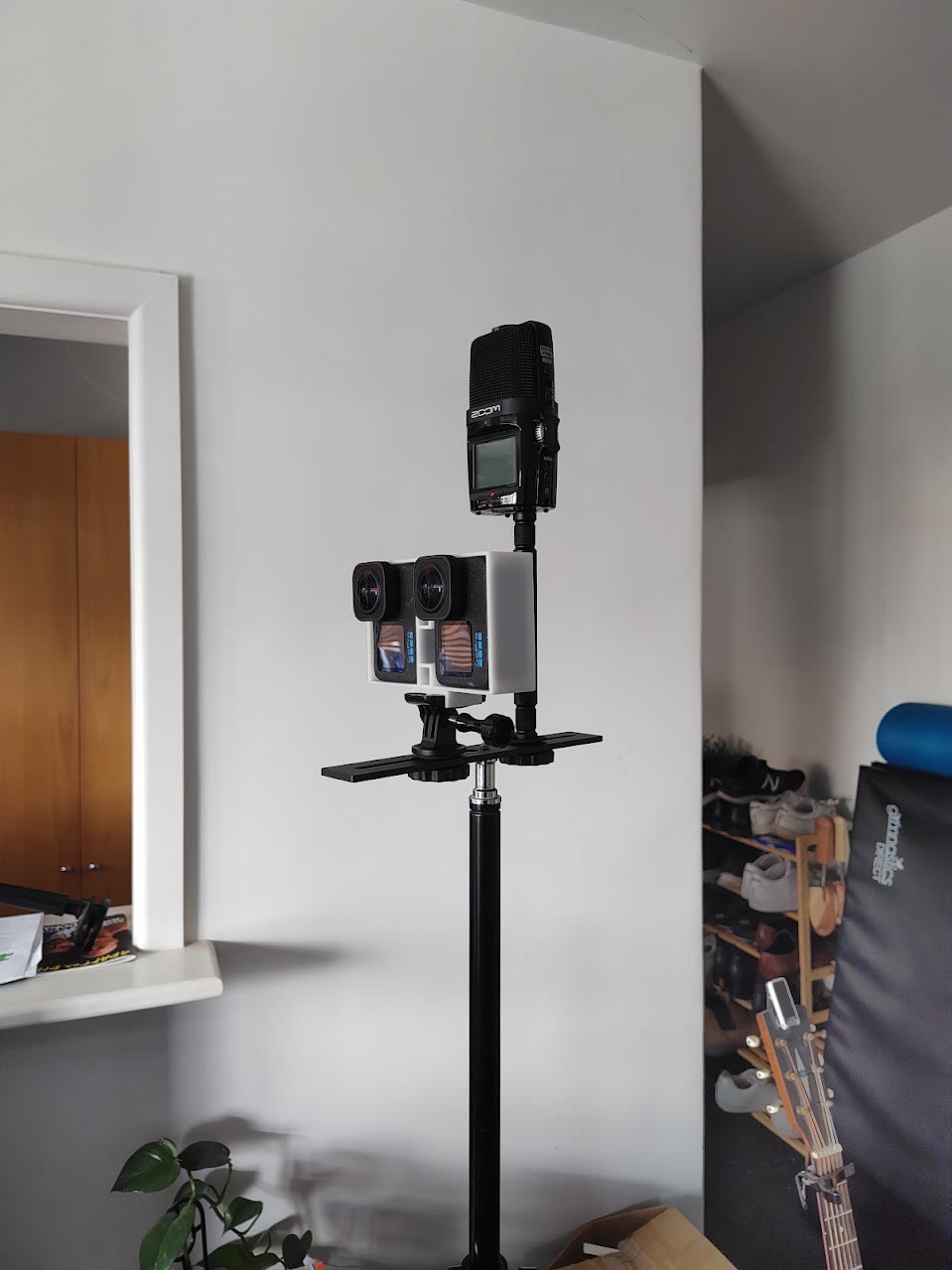
I used a stereo mount designed by Daniel Vega, bought two GoPro Hero 12s, and fitted the wide-angle Max Lens Mods.
The problem with two separate cameras is that they know nothing about each other. Start them a fraction of a second apart and the left and right eyes don't line up, and in VR that is the difference between feeling like you are there and feeling ill.
The QR beep ritual
GoPro has a timecode sync feature. You show an animated QR code from the app to each camera and it locks their clocks together. So before almost every shoot I would hold my phone up to the first camera until it beeped, then the second until it beeped. Two beeps meant they were synced and I could record. The clocks drift, so I had to do it again and again.
In good light it was easy. In bright sun or low light the cameras often could not read the code, and I would stand there trying every angle, quietly swearing at a pair of GoPros. At a Harry Potter exhibit once, my friends wandered in while I sat at the entrance for ages, cursing, because the thing just would not sync.
Weeks in the kitchen
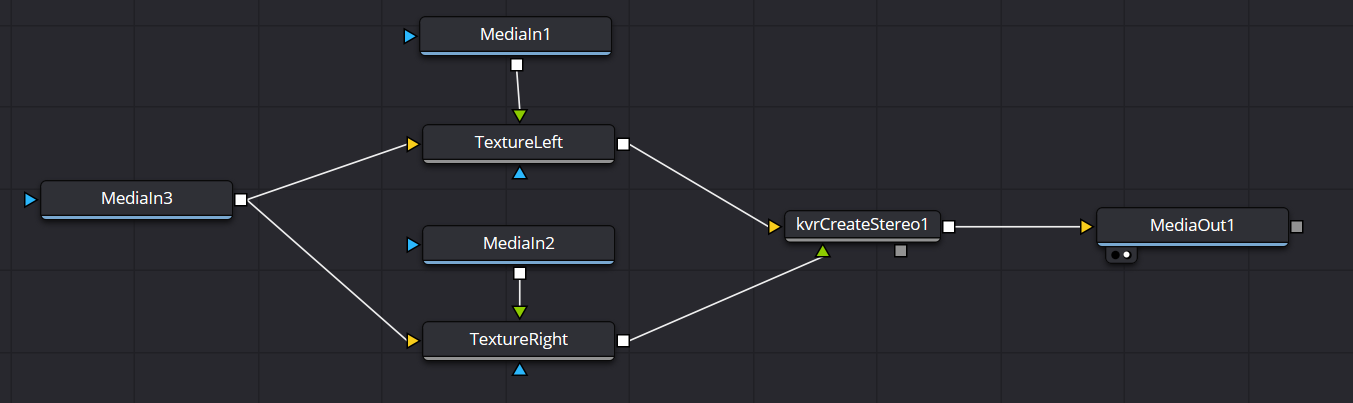
Getting two cameras to roll together was the easy part. Making the footage look like real life through a headset was the real work. I built my own process in DaVinci Resolve and more or less locked myself in my room for weeks.
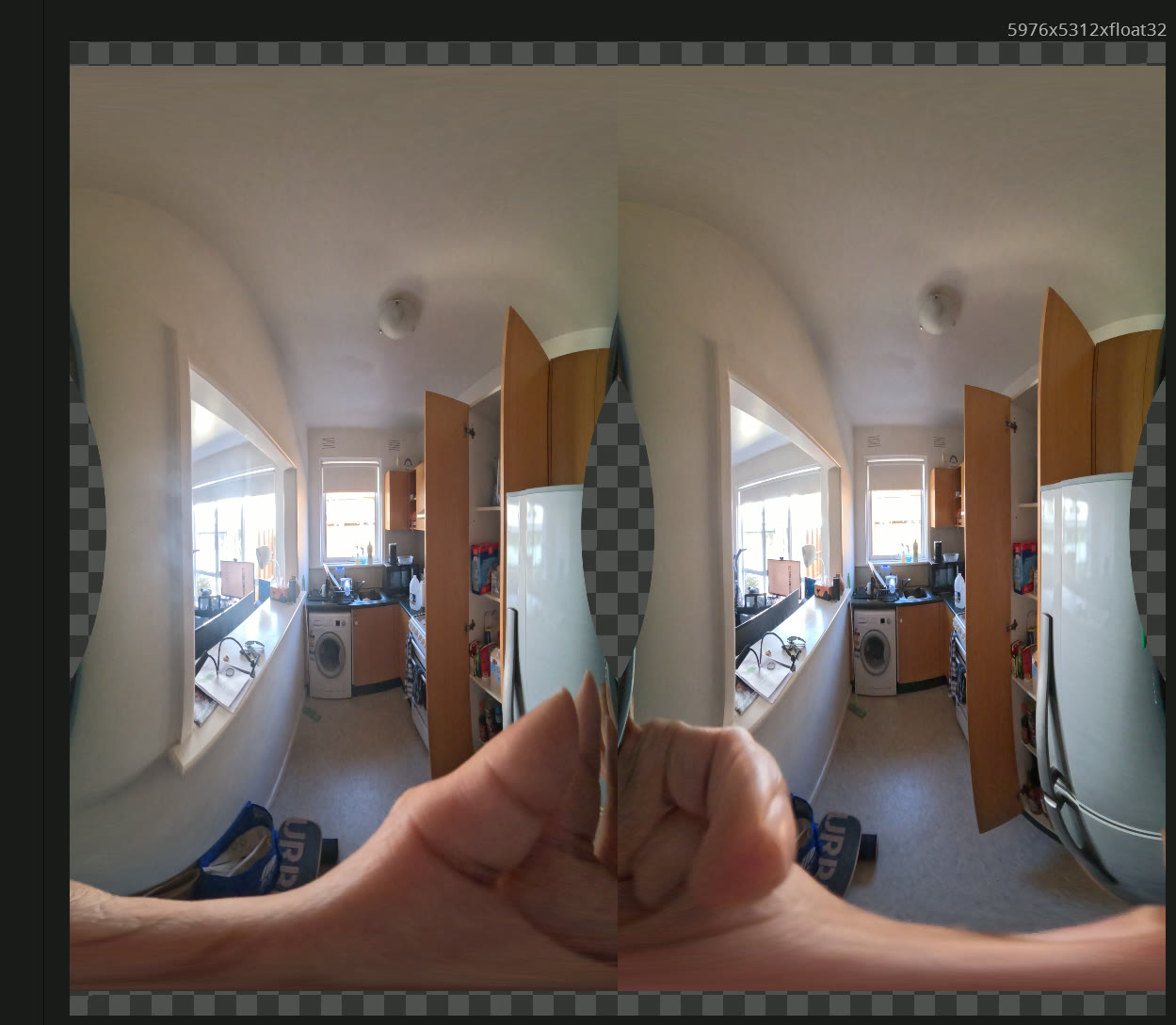
I would lay both cameras' footage side by side and apply distortion settings until everything sat at true scale in the headset. To check it, I used my kitchen. I would put the camera in one exact spot and film the washing machine and the countertop, process it with new settings, put on the headset, stand in the exact place the camera had been, and compare. Is the washing machine where it should be? The right size? Any stretch across the horizontal or the vertical?
Headset off, change a setting, headset on, look again. Over and over for weeks, until I put the headset on and it simply looked like standing in my kitchen.
Sound that matches
I wanted the sound to feel like the picture too. I recorded audio separately on a Zoom H2n, which I still have, for spatial sound. The routine was start both cameras, sync them, start recording, start the recorder, then clap or play a beep. In post I would line the audio up to the clap, mute the cameras' own audio, and keep the recorder. It made you feel like you were really in the room.
Worth it, then happily obsolete
It was a lot of fuss for a home-made camera, and I loved it anyway. Being able to film my own life in VR was worth every beep and every swear in the sun.
In May 2025 I moved to a modded QooCam Ultra VR180 rig, a mod by Siyang Qi, and the whole timecode ordeal just disappeared. I still sync the audio by hand, but the GoPro pain became a thing of the past, and I was glad to see it go. All of it fed straight into ReliVR, where filming life in VR is the whole point.